Cryogen-Free Superconducting Magnet Systems for Advanced Scientific Research

Products
Our superconducting magnets for research applications are high-performance systems developed to support cutting-edge scientific research and fundamental physics experiments. In addition to customized magnet systems designed to meet specific experimental requirements, we also offer standardized models suitable for a wide range of research fields.
The following examples highlight representative superconducting magnet systems designed and manufactured to meet unique customer requirements.
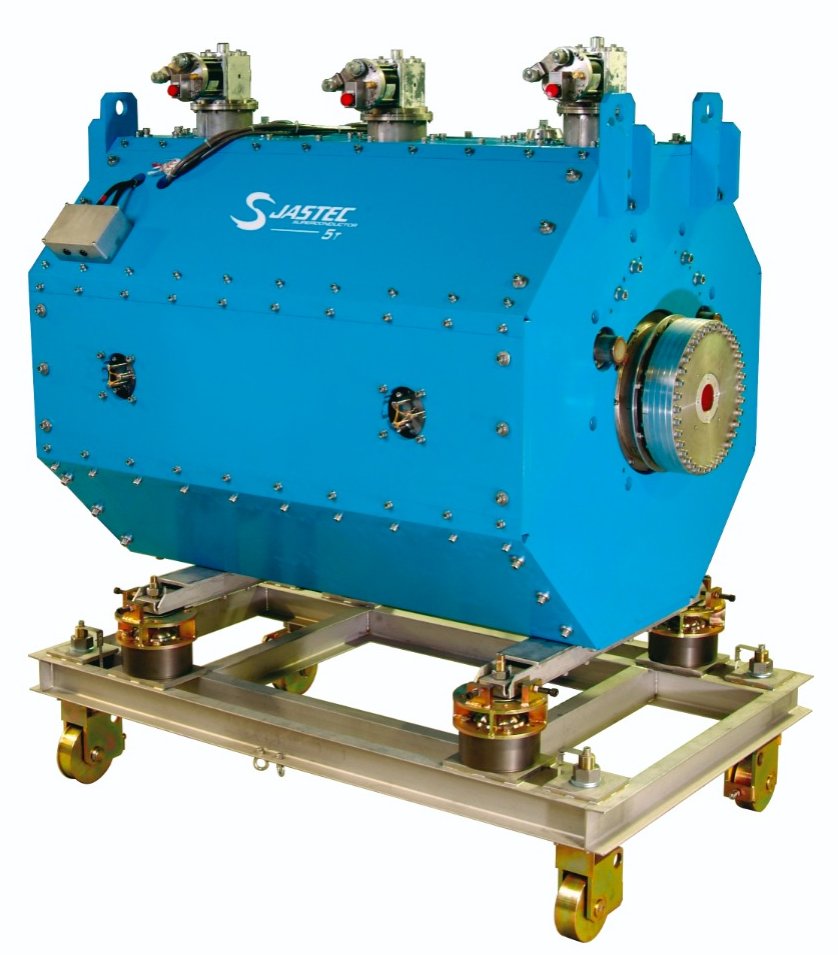
According to current cosmological theories, the Big Bang generated equal amounts of matter and antimatter approximately 13.8 billion years ago. One of the most fundamental questions in physics is whether antimatter possesses exactly the same properties as matter and, if differences exist, what those differences are.
To support this research, we developed a cryogen-free 5 T superconducting magnet system incorporating a Penning trap with an ultra-high-vacuum chamber. The system was commissioned by RIKEN and delivered to CERN for antimatter studies.
This customized magnet system continues to contribute to precision measurements of antimatter properties and to investigations into one of the greatest mysteries of modern physics: why matter survived while antimatter virtually disappeared from the universe.
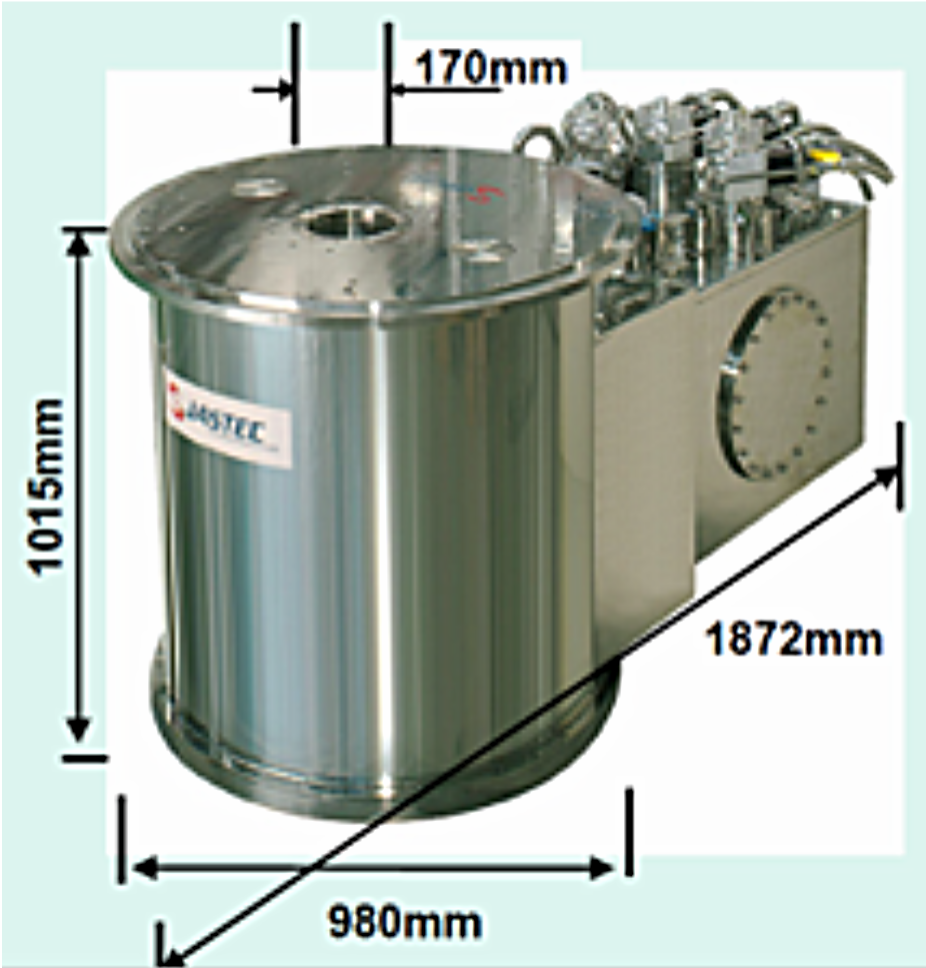
Following the end of the Cold War, an international collaboration involving the United States, the Soviet Union (now Russia), Europe, Japan, Korea, China, and India initiated the development of the International Thermonuclear Experimental Reactor (ITER).
ITER employs large superconducting magnets made entirely of Nb₃Sn conductors, including the Toroidal Field (TF) coils for plasma confinement and the Central Solenoid (CS) coils for plasma current initiation. Since the critical current density of Nb₃Sn is highly sensitive to mechanical strain, precise characterization of this behavior is essential for conductor and cable development.
Our cryogen-free 15 T superconducting magnet system was used to measure the critical current characteristics of Nb₃Sn strands as functions of strain, temperature, and magnetic field. The data obtained played an important role in the development and realization of the TF and CS magnets for ITER.
This system serves as another example of a customized magnet that contributed to one of the world's largest international scientific and engineering projects.
In addition to custom-designed systems, we offer standardized superconducting magnets with excellent versatility for a wide range of research applications.
• Proven standard designs based on extensive experience and field-proven performance
• Stable and reliable operation for long-term research use
We continue to expand and optimize our portfolio of standardized magnet systems to meet evolving research requirements and provide the most appropriate solutions for our customers.
No. |
Model |
Magnetic Field |
Bore Size |
|---|---|---|---|
1 |
JMTD-5T200CT-D |
5.0 Tesla |
φ180mm (Cold bore) |
2 |
JMTD-15T170 |
15 Tesla |
φ170mm(room temperature bore) |